
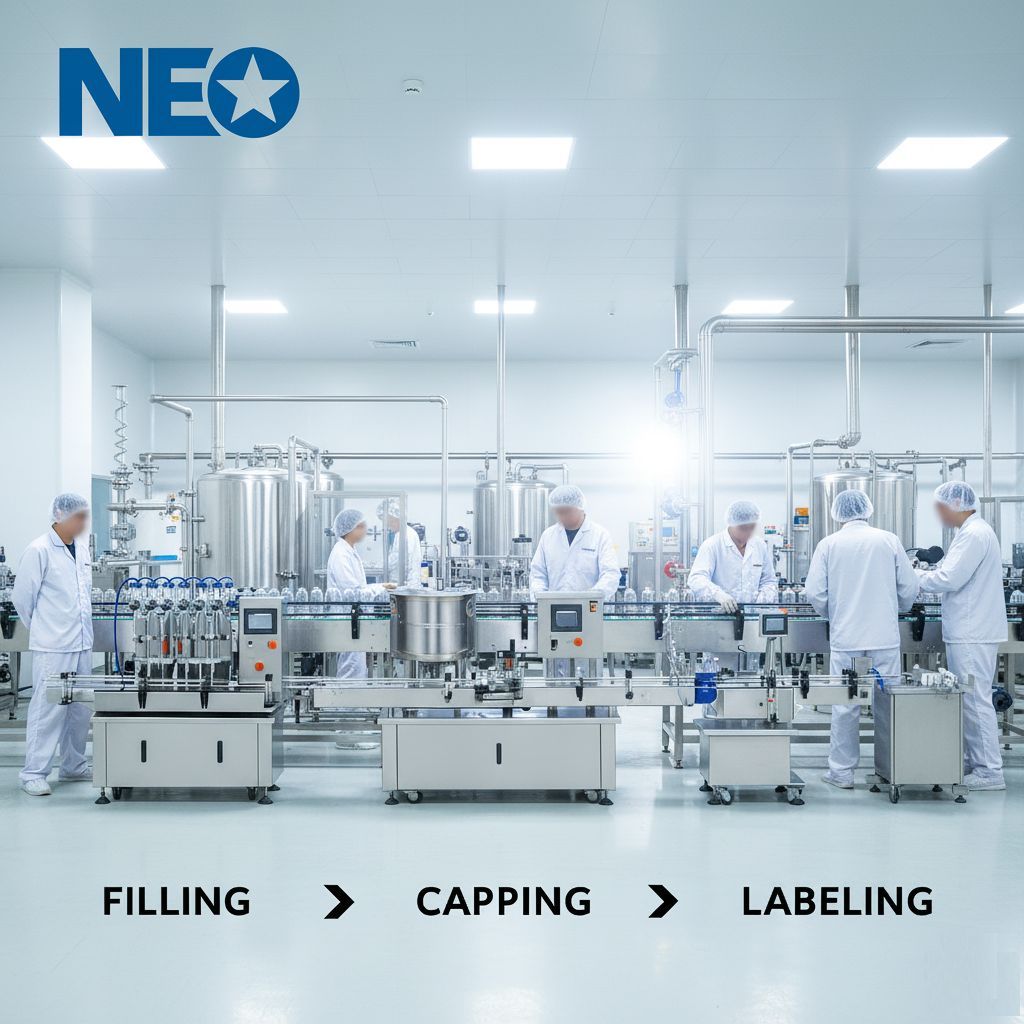
4. Do Liquid Products Need to Be Filtered Before Filling? Do Liquid Filling Machines Include Filtration?|Neostarpack
A liquid filling machine is strictly engineered for accurate dosing and dispensing—its primary role is not to remove impurities or filter raw materials.
Most filling machines do not include a built-in filtration system, because filtration is considered a separate pre-processing step. Before liquid enters the filling machine, it typically passes through an external filtration system to ensure:
• Removal of impurities and solid particles
• Protection of filling equipment from clogging or damage
• Reduced contamination risk during production
• Stable product quality and consistency
Proper filtration keeps both your filling machine and production line running smoothly.
1.Why Must Liquids Be Filtered Before Filling? How Does Filtration Relate to the Filling Machine??
A filling machine’s core function is metering and dispensing, while filtration is installed upstream, between the supply system and the filling machine’s inlet.
Filtration ensures:
• Product Quality & Safety:Removes particulates, pulp, sediments, or unwanted solids to ensure the final product meets quality standards and industry regulations—important for food, beverage, cosmetics, pharmaceuticals, and nutraceuticals.
• Equipment Protection:Prevents contaminants from entering precision components—reducing clogging, abrasion, or damage, and ensuring long-term filling accuracy and stability.
For many industries, filtration is a mandatory step in the entire production line.
2. How Should Liquids Be Filtered Before Entering the Filling Machine? What Filtration Methods Are Common?
Liquids that require filtration typically pass through a specialized system before reaching the filler. Common filtration methods include:
• Coarse Filtration:Using mesh filters or pre-filters to remove large pulp, fruit pieces, sediments, or visible particles. This reduces the load on downstream fine filters.
• Fine Filtration:Using membrane filters or adsorption filters to meet higher purity or clarity standards.
• Installation Location:Filters are usually installed along the supply line—most commonly right before the filling machine inlet.
• Cleaning & Maintenance:After each production cycle, both the filtration unit and all liquid-contact parts of the filling machine must be cleaned, disinfected, and sanitized to maintain hygiene and avoid contamination in the next batch.
3. How to Choose a Suitable Filtration System for Your Liquid Product?
Selecting the correct filtration system prevents production issues and ensures stable filling performance. Evaluation should consider:
(1)Production Volume:Confirm required flow rate per minute (L/min or GPM
(2)Filtration Surface Area:Larger surface area = less clogging + more stable production.
(3)Pore Size (Micron Rating):Choose based on product and purity level:
• Small micron = fine filtration (slower flow)
• Larger micron = coarse filtration (faster, suitable for pulp or particulates)
(4)Liquid Viscosity & Type:High-viscosity liquids (syrups, thick juices, pulpy beverages) require:
• Larger filters
• Multi-stage filtration
• Specialized filter designs
(5)Particle Load in the Liquid: More particles → larger filter capacity needed to maintain production speed.
4. How to Select the Right Filter Before Filling?
1. Confirm production flow rate
2. Choose the correct filter type based on liquid properties & particle size
3. Leave extra filtration capacity
Selecting a filter with higher-than-current demand avoids overload, prevents pressure loss, and supports future production expansion.
A properly sized system ensures optimal throughput for the entire filling line.
5. Which Products Require Filtration Before Filling?
• Juices with pulp or fruit particles
• Sauces, soy sauce, oils, and viscous liquids
• Cosmetics (lotions, serums)
• Health supplement liquids
6. What Happens If Liquids Containing Solids Are Filled Without Filtration?
Potential issues include:
• Filling nozzles becoming clogged
• Inaccurate filling volume
• Contamination risk inside the pipeline
• Inconsistent product appearance (sediment, cloudiness)
• Increased downtime and production interruptions
Filtration directly impacts both productivity and product quality.
7. Can a Filtration System Be Integrated with the Entire Filling Line?
Yes. Common integration methods include:
• Installing the filtration system on the supply line before the filler
• Sharing the same CIP system for cleaning
• Integrating with mixing tanks or storage tanks for full production-line automation
8. Does Neostarpack Provide Full Production Line Integration for Liquid Filling?
Absolutely. Neostarpack provides complete turnkey solutions, from bottle rinsing and filtration upstream, to filling, capping, labeling, printing, and inspection downstream.
We offer both single machines and full-line integration for food, beverage, cosmetic, nutraceutical, and chemical industries—ensuring seamless equipment compatibility, efficient operation, and reduced production risk.
9. What Full Production Line Modules Does Neostarpack Provide?
(1)Upstream Processing
• Filtration systems
• Mixing & homogenizing systems
• Heating & pasteurization
(2)Mid-Line Automation
• Bottle rinsers
• Automatic liquid filling machines
• Automatic cap feeders & capping machines
(3)Downstream Packaging
• Labeling machines
• Coding printers
• Product inspection (leak detection, weight check, CCD vision)
10. What Are the Advantages of Neostarpack’s Full-Line Integration?
High equipment compatibility:Entire line is designed and built by Neostarpack for maximum stability.
Accurate production planning:Customized speed, bottle type, volume, and accuracy planning prevents bottlenecks.
Lower integration cost:One provider = lower Total Cost of Ownership
and eliminates multi-vendor coordination issues.
Shorter installation & commissioning time:Neostarpack handles testing, calibration, and optimization.
High customization flexibility:Tailored to product characteristics and production requirements.
11. Which Industries Has Neostarpack Supported with Full-Line Filling Systems?
• Food processing (juice, sauces)
• Chemical plants
• Nutraceutical OEM/ODM manufacturers
• Cosmetics & beauty products (lotions, serums)
• Beverage co-packers (glass or PET)
• Pharmaceutical production
12. Neostarpack Full Production Line Planning Process
1. Understand product characteristics (viscosity, particulates, chemistry, pH, etc.)
2. Production capacity planning (bottle type, speed, fill volume)
3. Equipment configuration and line layout
4. On-site factory assessment
5. Manufacturing → Full-line testing → FAT acceptance
6. Installation & SAT acceptance
7. Training and production optimization
📩[Contact Neostarpack for a free consultation] info@neostarpack.com
Further Reading:
3. Oil/Lubricant Anti-Drip Filling Solutions
2. Do I Need One Filler for All My Oil Products? Understanding Liquid Oil Filling Machines
- Related Products
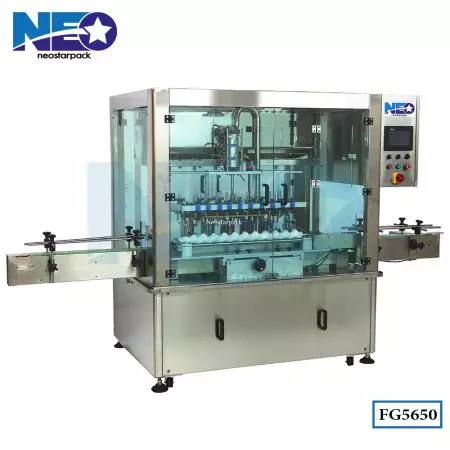
Automatic Bottle Filling Machine
FG5650
Automatic bottle filling machine having 12 head automatic liquid filling machine, filling machine...
Details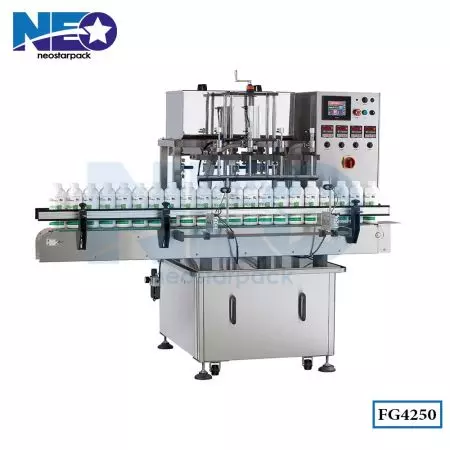
Automatic Gear Pump Liquid Filler
FG4250
FG4250 suits for various low viscosity liquid, such as lotion, syrup, cleanser, etc. No adjustment...
Details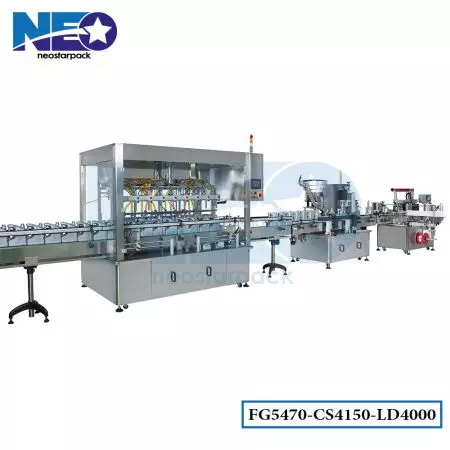
Fully Automated Filling-Capping-Labeling Production Line
FG5470-CS4150-LD4000
The system is widely used in food and beverage plants, pharmaceutical plants, plants of body-care...
Details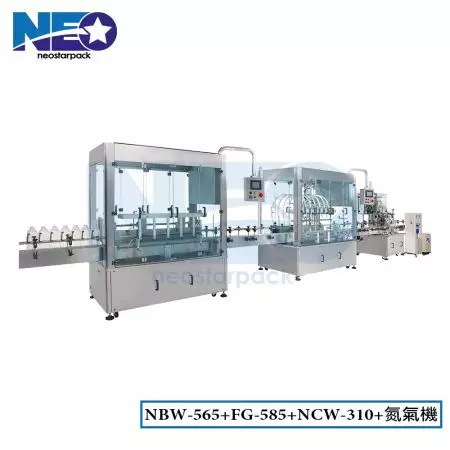
Automatic Bottle Rinsing Filling and Capping Machine
NBW-565 / FG-585 / NCW-310
Fully Auto Bottle Rinsing Filling and Capping Machine This is touch screen PLC base Rotary...
Details