
Semi-Automatic Tabletop Round Bottle Labeling Machine - Desktop Round Bottle Labeling Machine | Packaging Equipment Manufacturer - Neostarpack Co., Ltd.
Neostarpack is an industrial Semi-Automatic Tabletop Round Bottle Labeling Machine | Desktop Round Bottle Labeling Machine packaging equipment manufacturer from Taiwan. Industrial labeling, filling and capping machines with total packaging solutions for your industry since 1998. Outstanding labeling machine, liqiud filling machine, tablet capsul counting machine, automatic capping machine, bottle rinser machine, complete filling line, label counter, card feeder, label dispenser manufacturing.
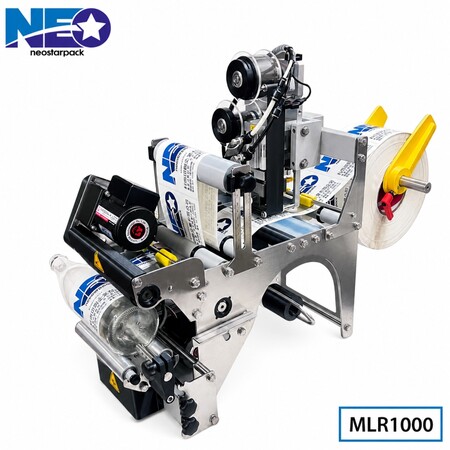
Semi-Automatic Tabletop Round Bottle Labeling Machine
MLR1000
Desktop Round Bottle Labeling Machine
Designed for low-volume, high-mix labeling of round bottles, cans, and cylindrical containers, the MLR1000 is a semi-automatic tabletop round bottle labeling machine designed by NEOSTARPACK. It is suitable for round bottles, round cans, and other cylindrical or near-cylindrical containers that can rotate steadily during the labeling process.
The operator only needs to load and remove the containers. The machine automatically performs label feeding, label detection, label dispensing, wrap-around labeling, and backing paper rewinding. The MLR1000 is suitable for manufacturers that still use manual labeling but want to improve labeling consistency, reduce manual operations, and do not yet require a automatic labeling production line for medium- or low-volume production.
The MLR1000 is particularly suitable for low-volume, high-mix production, multi-batch production, frequent product specification changes, limited production space, and operations where one person needs to complete the labeling process.
What Is the MLR1000 Labeling Machine?
The MLR1000 is a semi-automatic labeling machine specifically designed for round bottles and cylindrical containers. The labeler MLR1000 uses a stepper motor to drive label feeding, while a photoelectric sensor detects the gaps between labels. After the label is dispensed and separated from the backing paper, a rolling labeling mechanism rotates the container so that the label is applied around the circumference of the container.
Compared with manual labeling, the MLR1000 labeling machine performs label feeding, label dispensing, and rolling application mechanically.
Compared with an automatic round bottle labeling machine, the MLR1000 retains the flexibility of manual loading and unloading of bottles, allowing the operator to control the timing of the operation according to actual production conditions.
Therefore, it is particularly suitable for low- to medium-volume production, low-volume high-mix production, and production environments with limited space. The MLR1000 is a semi-automatic labeling machine positioned between fully manual labeling and a fully automatic round bottle labeling production line.
For manufacturers looking to upgrade from completely manual labeling, the MLR1000 provides a practical step toward semi-automated production.
Product Positioning | A Machine-Based Solution Between Manual and Fully Automatic Labeling
Different production volumes and production conditions require different labeling methods.
Solution | Operation Method | Suitable Applications |
Manual Labeling | Manually peel, align, and apply labels | Very small quantities, infrequent production, and applications where a high degree of variation in manual operation is acceptable |
MLR1000 Semi-Automatic Labeling Machine | Operator loads and removes bottles; machine feeds, dispenses, rolls labels, and rewinds backing paper | Low-volume high-mix production, frequent specification changes, and tabletop production where space is limited |
Automatic Round Bottle Labeling Machine | Automatic conveying, positioning, and continuous labeling | Continuous high-volume production or production lines connected with upstream and downstream equipment |
The MLR1000 is not designed to completely eliminate manual labor. Instead, it provides a flexible semi-automatic labeling solution for manufacturers that currently rely entirely on manual labeling, experience problems with labeling accuracy or production efficiency, but do not yet have production volumes that require a fully automated labeling line.
Who Is the MLR1000 Suitable For?
The MLR1000 is suitable for the following production conditions:
1. Upgrading from Manual Labeling to Semi-Automatic Labeling
For manufacturers currently relying primarily on manual label peeling, alignment, and application, the MLR1000 provides stable label feeding and a rolling labeling mechanism to reduce differences in label position caused by different operators.
2. Low-Volume, High-Mix and Batch Production
Each production batch may be relatively small, but the manufacturer handles multiple product specifications or bottle types and frequently needs to change containers, labels, or labeling positions.
3. Limited Production Space
The labeling machine can be placed on a worktable or within an existing work area without requiring a large automated production line.
4. One-Person Operation
One operator can perform bottle loading, labeling, and bottle removal, creating a semi-automatic labeling workstation that can be operated by one person.。
5. Special Functions or Optional Modules
For applications requiring a transparent-label photoelectric sensor, date/batch/serial-number printing, or customized container handling mechanisms such as a top pressing mechanism, optional modules can be evaluated according to the labeling requirements of the product.
What Production Problems Can the MLR1000 Semi-Automatic Labeling Machine Address?
● Inconsistent Manual Label Positioning
Manual labeling can be affected by operator hand movements, label alignment methods, and working conditions. The MLR1000 standardizes the labeling process through mechanical label application. Actual labeling results are affected by factors including container roundness, surface condition, label material, label die-cutting, and machine adjustment.
● Labels That Become Skewed or Wrinkled
The MLR1000 uses a rolling labeling method to rotate round bottles or containers so that the label follows the circumference of the container. For round containers suitable for rolling application, properly adjusting the roller position and machine settings can improve labeling position consistency. Actual results should be confirmed through testing with the actual bottles and labels.
● Time-Consuming Manual Label Peeling and Backing Paper Handling
The machine automatically dispenses labels and separates them from the backing paper. After labeling, the backing paper is collected and rewound by the waste backing-paper collection mechanism. This helps address the problem of backing paper becoming scattered and disorganized on the worktable.
● Frequent Changes Between Different Products
The MLR1000 can be adjusted according to different bottle diameters, label sizes, and labeling positions, making it suitable for processes with many product specifications and batch production.
● A Fully Automatic Production Line Is Not Yet Required
If the current production volume is low to medium and the factory can accept manual bottle loading and unloading, the MLR1000 provides a suitable step from fully manual labeling toward mechanized labeling.
● Flexibility for Future Expansion and Upgrades
If production volume increases in the future, or if the production process needs to connect with other packaging machines such as filling machines and capping machines, the manufacturer can then evaluate an automatic labeling machine or a complete packaging production line.
How the MLR1000 Works
The basic labeling process of the MLR1000 is as follows:
STEP 01: Install the Label Roll
Install the complete roll of pressure-sensitive labels on the machine's label unwind section. Adjust the position according to the label width so that the label web can move smoothly without skewing during feeding.
STEP 02: Load the Round Bottle or Container
The operator places a round bottle, round can, or other cylindrical container suitable for rolling application into the labeling position on the rollers. The container is aligned according to the required labeling height and starting position.
STEP 03: Automatic Label Feeding and Detection
After the machine starts, the stepper motor drives the label web forward.
The label photoelectric sensor detects the gap between labels and accurately controls the timing of label dispensing. Standard labels can generally use the standard label sensor. For transparent labels, a dedicated transparent-label photoelectric sensor can be selected according to the label material.
STEP 04: Label Dispensing and Rolling Application
As the label passes over the dispensing plate, it separates from the backing paper.
The container rotates synchronously with the roller, allowing the label to follow the circumference and smoothly adhere to the bottle or container surface.
STEP 05: Backing Paper Rewinding and Finished Product Removal
After the label is separated, the backing paper is automatically collected and rewound by the backing-paper collection reel. Once labeling is completed, the operator removes the finished product and places the next bottle into the machine for labeling.
Suitable Products and Containers
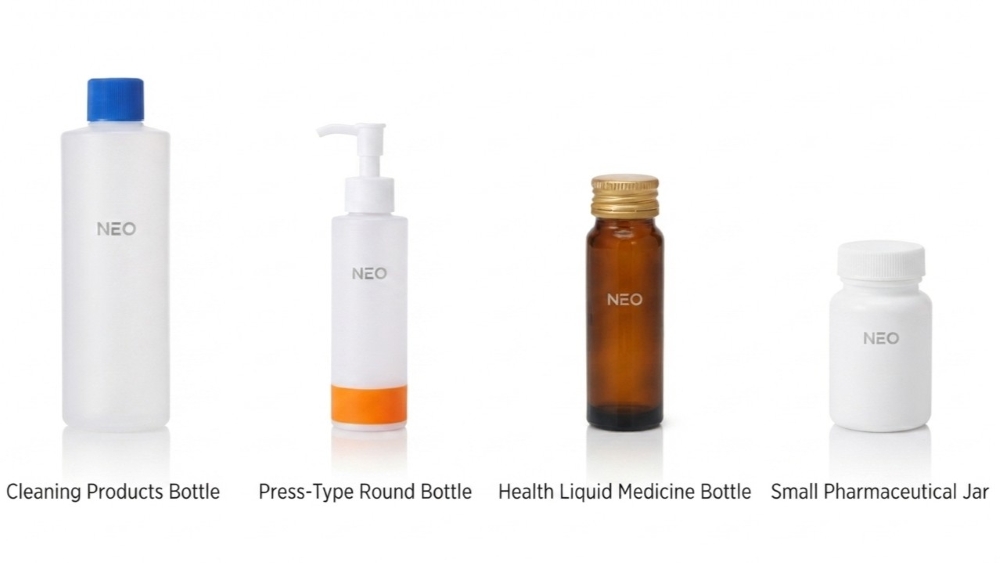
The MLR1000 is primarily suitable for cylindrical or near-cylindrical bottles and containers that can rotate steadily on the rollers. The standard machine is suitable for container diameters of 30–100 mm. If the container size falls outside this range, customers are welcome to provide the product dimensions and actual samples so that NEOSTARPACK can evaluate whether customized adjustments are required.
Suitable Container Shapes
• Round bottles
• Small round bottles
• Round cans
• Wide-mouth round bottles and cans
• Cylindrical containers
• Long cylindrical cans
• Slender tubes with sufficient structural support
• Other near-cylindrical containers that can rotate steadily
Suitable Container Materials
• Glass
• PP (polypropylene)
• PE (polyethylene)
• PET
• PVC (polyvinyl chloride)
• Tinplate
• Aluminum
• Stainless steel
• Thick paper tubes or paper cylinders with sufficient rigidity
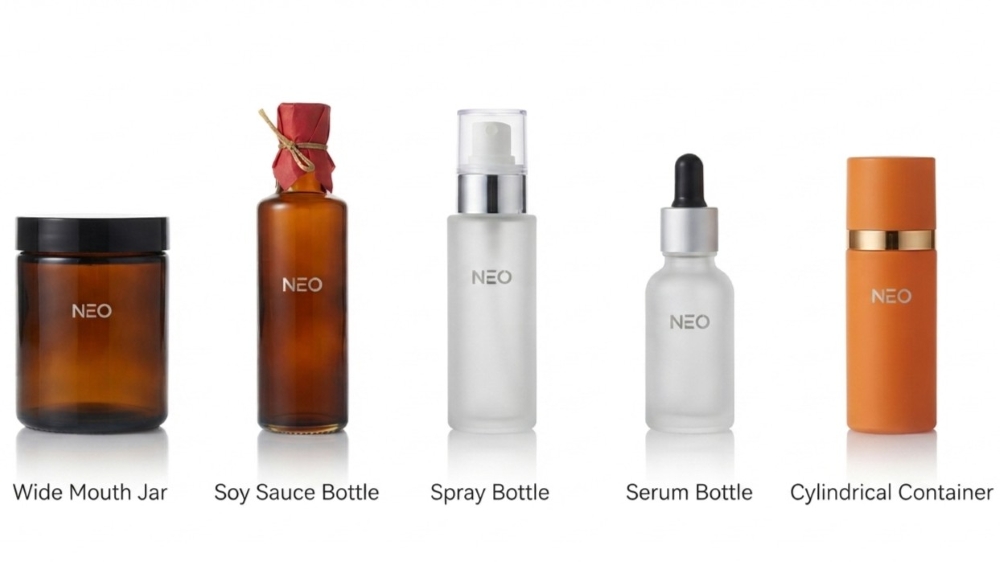
Products Suitable for Semi-Automatic Round Bottle Labeling Machines
Container Application Examples
Container Application | Common Products |
Spray Bottles | Cleaning products, cosmetics, and other products |
Small Bottles | Health supplements, reagents, and other small-volume products |
Cylindrical Containers | General round bottles and cylindrical products |
Wide-Mouth Round Bottles | Food, health supplements, and other canned or jarred products |
Glass Round Bottles | Cosmetics, food, beverages, and other products |
Pump Bottles and Foam Bottles | Personal care and cosmetics |
Serum Bottles | Cosmetics and skincare products |
Health Supplement Bottles | Dietary supplements and nutritional products |
Cleaning Product Bottles | Detergents and household products |
Suitable Labels
The MLR1000 is suitable for roll-fed pressure-sensitive labels.
Applicable Label Dimensions:
• Label width: 10–150 mm
• Label length: 20–300 mm
Labels can be used for product names, ingredient information, barcodes, serial numbers, anti-counterfeit markings, promotional information, and other product identification information.
● Standard Paper or Film Pressure-Sensitive Labels
Roll-fed pressure-sensitive labels with clearly defined label gaps can generally be detected using the standard label photoelectric sensor.
● Transparent Labels
Transparent labels require application evaluation and generally require an optional dedicated transparent-label photoelectric sensor. Because the light transmission characteristics of transparent labels can affect sensor detection, it is recommended to provide actual labels and containers for testing before formal equipment purchasing. This allows the label detection, backing-paper separation, and label application results to be confirmed.
● Special Materials or Labels with Small Gaps
If the label has any of the following characteristics:
• Highly reflective material
• Special backing paper
• Irregularly shaped labels
• Very small gaps between labels
• Special thin-film materials
It is recommended to provide an actual sample roll for testing to confirm label sensor detection and label dispensing performance.
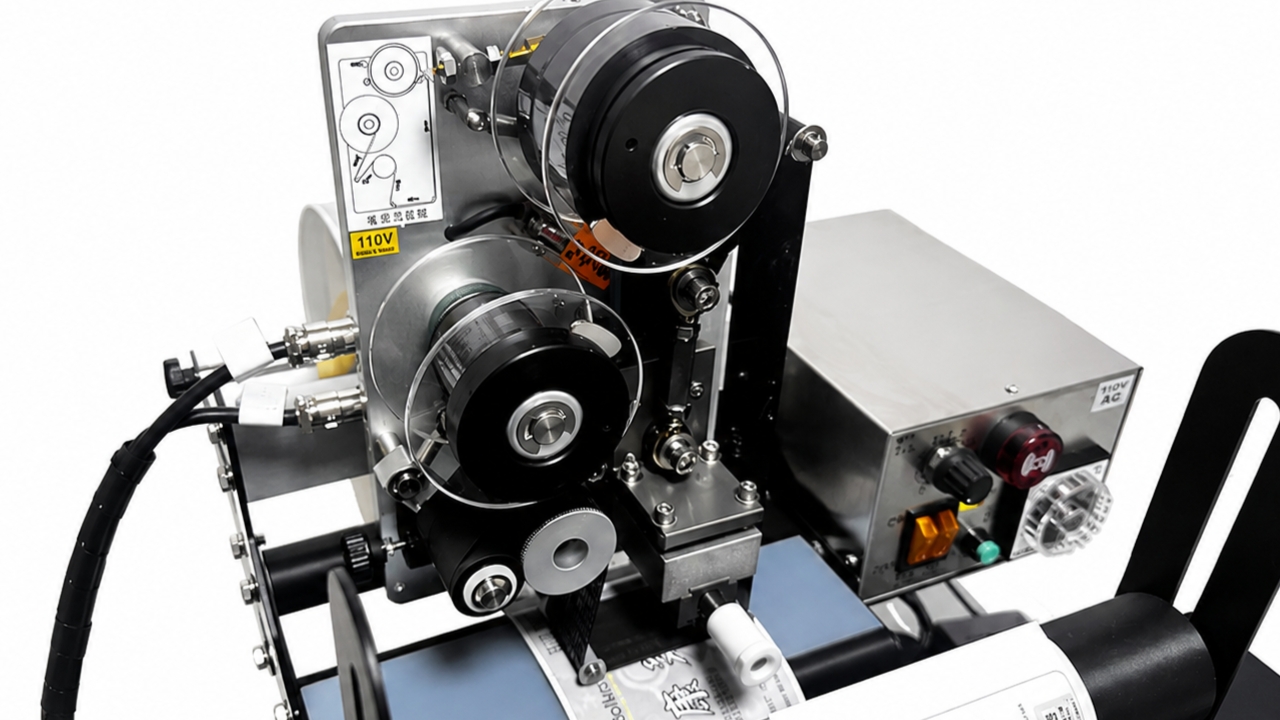
● Date, Batch Number and Serial Number Printing
If dates, batch numbers, or serial numbers need to be printed during the labeling process, a printer/coding machine and printer mounting bracket can be evaluated as optional equipment.
The actual printing area, font, speed, consumables, and compatibility with the label material need to be further confirmed according to the product conditions.
Applicable Industries
The MLR1000 can be used for round bottle and cylindrical container labeling in different industries according to the container, label, and production conditions.
Industry | Common Applications |
Food & Beverage | Soy sauce, sauces, beverages, bird's nest products, baking ingredients, and round bottles or containers |
Pharmaceuticals & Health Supplements | Oral liquid bottles, pharmaceutical bottles, health supplement bottles and containers |
Cosmetics & Personal Care | Toners, serums, hair oils, perfumes, lip balm tubes, and mouthwash bottles |
Biotechnology & Laboratories | Low-volume production, sample bottles, and cylindrical containers |
Chemical & Automotive Maintenance | Motor oil, cleaning agents, spray cans, and other round bottle products |
Household Cleaning Products | Detergents, bleach, air fresheners, and round bottles or cans for insecticides |
Actual suitability depends on the container dimensions, shape, weight, material, surface condition, and label characteristics.
MLR1000 Machine Configuration
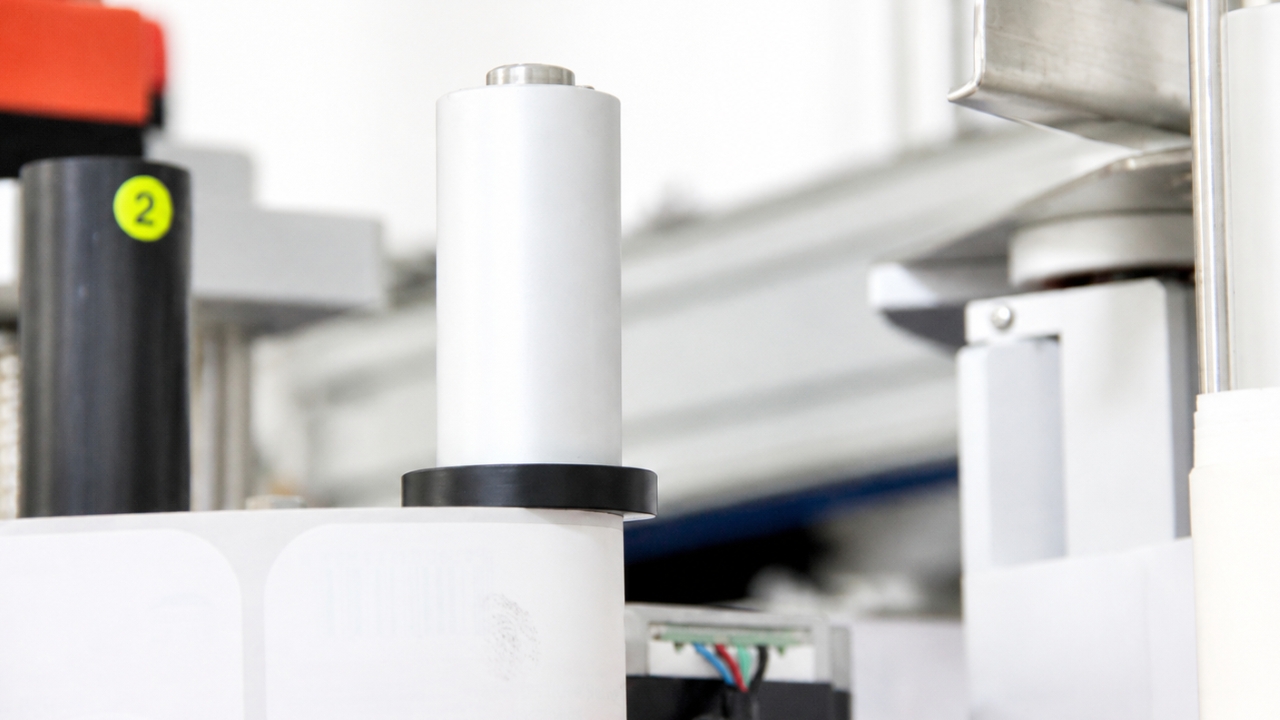
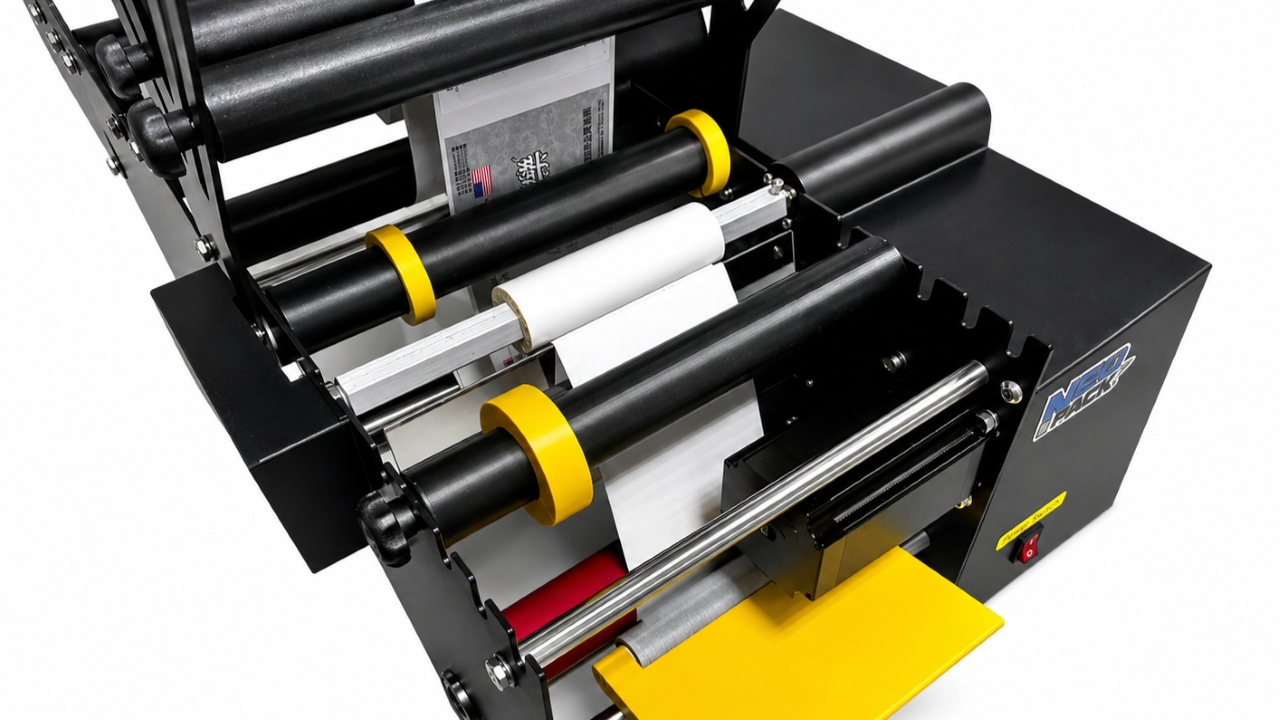
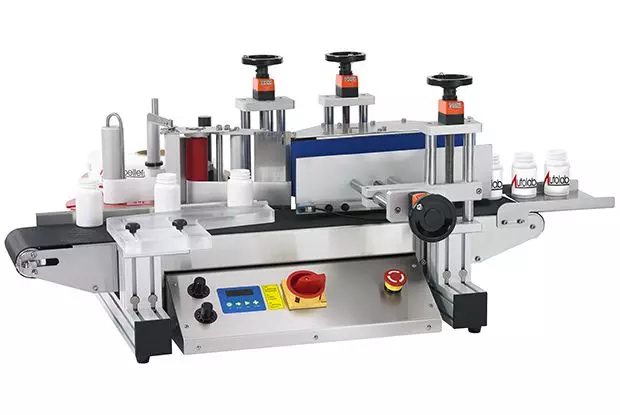
The main mechanisms of the MLR1000 include the label unwinding section, label guide, label roll retaining ring, label photoelectric sensor, dispensing plate, rolling labeling mechanism, and backing-paper collection mechanism.
Label Roll and Unwind Section
The label roll is installed on the machine's unwind section. The retaining ring and guide mechanism control the feeding direction of the label web.
Label Guide and Rolling Labeling Mechanism
The label web follows a fixed path into the dispensing and rolling labeling area. The container rotates on the rollers, allowing the label to gradually adhere to the cylindrical surface.
Label Roll Retaining Ring
The position of the retaining ring can be adjusted according to the label width to maintain a stable label feeding path.
Backing Paper Collection
After the labels are dispensed, the backing paper is collected and rewound by the collection mechanism, reducing scattered backing paper in the work area.
Is Your Product Suitable for the MLR1000?Round Bottle Labeling Machine Selection Guide
If your production conditions meet the following requirements, the MLR1000 can be evaluated as a semi-automatic round bottle labeling machine:
• Round or cylindrical containers are the primary product packaging
• The container can rotate steadily on the rollers
• Standard container diameter is within 30–100 mm
• Manual labeling is currently the primary labeling method
• You want to improve manual labeling consistency and labeling position consistency
• Products are produced in low-volume, high-mix or small batches
• Product types or label specifications need to be changed frequently
• Production space is limited
• Manual bottle loading and unloading is acceptable
• You want one person to complete the labeling operation
• Connection with upstream and downstream packaging equipment is not currently required
• Transparent labels or date/batch-number printing are required
If most of these conditions apply, the MLR1000 can be considered as a phased solution for upgrading from manual labeling to semi-automatic labeling.
How to Choose Between the MLR1000 Semi-Automatic Round Bottle Labeling Machine and an Automatic Round Bottle Labeling Machine?
When selecting a labeling machine, manufacturers should not only consider the labeling speed of the individual machine. Production volume, product specifications, production quantity, changeover frequency, labor allocation, and connection with upstream and downstream equipment should also be considered.
Production Condition | Recommended Solution |
Low-volume, high-mix production | MLR1000 |
Small-volume production | MLR1000 |
Frequent changes in bottle types or labels | MLR1000 |
Limited working space | MLR1000 |
Manual bottle loading and unloading is acceptable | MLR1000 |
High-volume continuous production | Fully automatic round bottle labeling machine |
Automatic conveying is required | Fully automatic round bottle labeling machine |
Connection with a filling machine is required | Fully automatic machine / complete production line solution |
Connection with a capping machine is required | Fully automatic machine / complete production line solution |
Reduction of manual operation is required | Fully automatic machine |
Phased Automation
For small and medium-sized manufacturers, automation does not necessarily have to be implemented all at once.A common equipment implementation path is:
Manual Labeling → MLR1000 Semi-Automatic Labeling Machine → Fully Automatic Labeling Machine → Integration with Filling and Capping Machines
Therefore, the MLR1000 can serve as a phased production solution during the transition toward automated packaging.
What Information Should Be Prepared Before Purchasing?
To evaluate whether the MLR1000 is suitable for your products, it is recommended to prepare the following information before making an inquiry or conducting a test:
1. Physical container samples
2. Container diameter and height
3. Container weight
4. Container material
5. Container surface condition
6. Intended labeling position
7. Actual production label roll
8. Label dimensions
9. Label gap
10. Label roll inner and outer diameters
11. Estimated production volume
12. Production quantity per batch
13. Number of product specifications or bottle types
14. Whether transparent labels are used
15. Whether date, batch number, or serial number printing is required
16. Power requirements at the production area
For special containers, special labels, or products outside the standard specifications, it is recommended to provide actual container and label samples for labeling testing.
Related Equipment Recommendations
If your production requirements involve more than labeling and you also need to establish a complete bottle packaging production process, related equipment can be evaluated according to the actual production requirements.
Equipment Type | Suitable Conditions | Relationship with MLR1000 |
Automatic Round Bottle Labeling Machine | High-volume continuous production | Automatic conveying and continuous labeling replace manual bottle loading and unloading |
Flat Surface Labeling Machine | Boxes, bags, lids, or flat products | Suitable for flat-surface labeling of non-cylindrical products |
Double-Sided Labeling Machine | Square bottles, flat bottles, or oval bottles | Front-and-back or two-sided labeling can be evaluated according to product conditions |
Filling Machine | Quantitative liquid filling | Can serve as an upstream machine in a bottle packaging production line |
Capping Machine | Automatic bottle cap tightening | Can be integrated with filling and labeling processes |
Automated Packaging Equipment | Complete bottle packaging process | A complete line can be planned according to production volume and product conditions |
From Individual Machine Labeling to Complete Packaging Automation
The MLR1000 can independently perform semi-automatic round bottle labeling.
If production volume increases in the future, equipment can be introduced progressively according to actual production capacity requirements:
Filling → Capping → Labeling → Printing → Packaging
Different machine configurations can be planned according to the product, production volume, factory space, and labor allocation to create an appropriate automated production process. NEOSTARPACK's equipment includes bottle washing machines, bottle unscramblers, filling machines, capping machines, labeling machines, and other packaging equipment. Equipment selection and complete solution evaluation can be provided according to the customer's product conditions and production requirements.
Why Choose NEOSTARPACK?
NEOSTARPACK focuses on automated bottle packaging equipment. Its product range includes labeling machines, filling machines, capping machines, capsule counting machines, bottle washing machines, bottle unscramblers, and other packaging equipment.
For different products, containers, and production conditions, equipment selection should not be determined solely by a single speed or specification. The following factors should be considered comprehensively:
• Container shape and dimensions
• Label material and dimensions
• Production volume
• Number of product specifications
• Changeover frequency
• Labor allocation
• Production space
• Upstream and downstream equipment
• Future automation requirements
Therefore, selection of a semi-automatic round bottle labeling machine should also be evaluated and confirmed based on the actual product container, labels, and production conditions.
Product Evaluation and Quote Request
If you are currently evaluating any of the following:
• Upgrading from manual labeling
• Semi-automatic round bottle labeling machines
• Tabletop labeling equipment
• Low-volume, high-mix labeling
• Transparent label application
• Date and batch-number printing
• Round bottle labeling machine selection
• Future integration with filling machines and capping machines
You are welcome to provide your container samples, label sample rolls, product dimensions, estimated production volume, and labeling requirements.
NEOSTARPACK can help evaluate which machine model is suitable according to the actual product conditions and, when necessary, assist with sample testing and equipment configuration evaluation. The equipment selection process starts with the actual product requirements so that the labeling equipment can be matched to the current production needs.
- Features
1. Semi-Automatic Round Bottle Rolling Labeling: The operator loads and removes the bottles while the machine automatically feeds, dispenses, and rolls the labels and collects the backing paper. It is suitable for establishing an independent labeling workstation within a production area.
2. Stepper Motor Drive: The stepper motor accurately controls the label feeding length and can accommodate different label lengths and operator working rhythms.
3. Label Photoelectric Sensor Detection: The machine automatically detects standard label gaps. For transparent labels, a dedicated transparent-label photoelectric sensor can also be selected according to the application requirements.
4. Flexible Specification Adjustment: The rollers and label guides can be adjusted to accommodate different bottle diameters, label widths, and labeling heights.
5. Supports a 300 mm Large Label Roll: The machine can accommodate large outside-diameter label rolls, reducing the need for frequent label roll replacement during short production runs.
6. Automatic Backing Paper Rewinding: The backing paper remaining after label application is automatically collected and rewound, making cleanup easier after production.
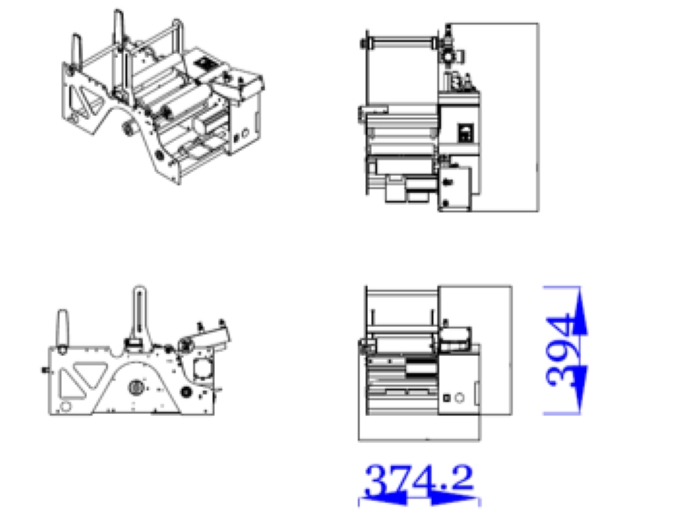
7. Space-Saving Tabletop Design: The compact machine measures approximately 763 × 354 × 462 mm and can be placed directly on a worktable or within a production-line workspace.
8. Robust Metal Machine Structure: The main machine structure is constructed from SUS304 stainless steel and hardened aluminum alloy for a solid machine structure.
9. Modular Optional Configuration: Optional functions such as a pneumatic top pressing module, transparent-label photoelectric sensor, or date printer can be added according to production requirements.- Specification
- Labeling Method: Rolling labeling for cylindrical containers
- Labeling Motor: Stepper motor drive
- Labeling Speed: 20–30 bottles/minute, depending on product and label dimensions
- Labeling Accuracy: ±1 mm; actual results vary depending on container, label material, and machine adjustment conditions
- Product Diameter: 30–100 mm; other dimensions can be evaluated for customization
- Label Width: 10–150 mm
- Label Length: 20–300 mm
- Label Roll Inner Diameter: 75 mm
- Maximum Label Roll Outer Diameter: 300 mm
- Power Requirement: 110 or 220 VAC, 50/60 Hz, single phase
- Machine Dimensions: L 763 × W 354 × H 462 mm
- Main Structural Materials: SUS304 stainless steel and hardened aluminum alloy
- Standard Operation: Operator loads and removes bottles; the machine performs label feeding, label dispensing, rolling application, and backing-paper collection
- Optional Equipment: Pneumatic top pressing module, transparent-label photoelectric sensor with bracket, printer with bracket
- Specification Note: The above dimensions and specifications may vary according to the actual configuration. The final equipment configuration and supplied items are subject to the formal quotation and confirmed purchase order.
- Option Accessories
- 1. Pneumatic Top Pressing Module: For special containers, a pneumatic top pressing module can be evaluated to assist with product positioning and rolling labeling. Whether a top pressing mechanism is required should be evaluated according to the actual bottle height, shape, weight, and labeling position.
- 2. Transparent-Label Photoelectric Sensor: The light transmission characteristics of transparent labels may affect the detection of standard label sensors. A transparent-label photoelectric sensor can therefore be selected as an optional component. Testing with the actual labels and containers is recommended.
- 3. Printer and Mounting Bracket: A printer and mounting bracket can be evaluated according to production requirements for printing dates, batch numbers, serial numbers, and other information. The actual printing position, font, consumables, and printing speed need to be confirmed according to the label material and machine configuration.
- Q&A
Q1. What production volume is the MLR1000 suitable for?
A:
The MLR1000 is suitable for low-volume, high-mix and low- to medium-volume labeling operations. The machine labeling speed is 20–30 bottles per minute, but actual production output is affected by manual bottle loading and unloading, container dimensions, label length, product conditions, and the frequency of production changeovers. If long-term continuous high-volume production is required, it is recommended to further evaluate an automatic round bottle labeling machine.Q2. Can the MLR1000 replace manual labeling?
A:
The MLR1000 can transfer manual label peeling, alignment, and application operations to the labeling machine. However, the operator is still required to load and remove the containers. Therefore, the MLR1000 is a semi-automatic labeling machine, not a fully automatic labeling machine that operates without manual handling.Q3. Can the MLR1000 label square bottles, oval bottles, or tapered bottles?
A:
The standard machine is primarily designed for cylindrical containers that can rotate steadily. It is generally not intended for standard square bottles, oval bottles, tapered bottles, or other irregular containers. Different labeling methods, fixtures, or customized mechanisms need to be evaluated according to the product shape.Q4. Can the MLR1000 apply transparent labels?
A:
Testing and evaluation are required. Transparent labels generally require an optional transparent-label photoelectric sensor. Because different transparent labels have different materials, light transmission characteristics, backing papers, and label gaps, it is recommended to provide an actual label roll and container for testing. This allows the label detection, dispensing, and application results to be confirmed.Q5. How long does it take to change between different bottle diameters or labels?
A:
Under appropriate conditions and when the operator is familiar with the machine settings, specification changeover generally takes approximately 5 minutes. The main adjustment items include the roller position, installation of the complete label roll, retaining ring, and sensor position. Actual changeover time varies according to product differences, adjustment requirements, and operator familiarity with the machine.Q6. Can the MLR1000 be used for bottles with a diameter larger than 100 mm or smaller than 30 mm?
A:
The standard container diameter range of the MLR1000 is 30–100 mm. If the container falls outside the standard range, please provide the container dimensions, weight, material, and actual sample. NEOSTARPACK can then evaluate whether the machine can be used through mechanical adjustment or customization.Q7. Can the MLR1000 achieve labeling accuracy of ±1 mm?
A:
±1 mm is the standard machine specification value. However, actual labeling results are also affected by factors such as container roundness, surface friction, label die-cutting accuracy, label gap, label material, container surface condition, and machine adjustment conditions. For products with higher labeling accuracy requirements, it is recommended to conduct testing with the actual containers and labels before purchasing the equipment.Q8. Can dates or batch numbers be printed during labeling?
A:
Yes. A printer and mounting bracket can be selected according to production requirements. The actual printing content, font, printing area, speed, consumables, and label material need to be confirmed according to the actual product conditions.Q9. Is the MLR1000 suitable for low-volume, high-mix products?
A:
Yes. The MLR1000 retains the flexibility of manual bottle loading and unloading while allowing the machine to be adjusted according to different bottle diameters, label dimensions, and labeling positions. It is therefore suitable for applications with many product types, small production volumes, or frequent changes in labeling specifications.Q10. How should I choose between the MLR1000 and a fully automatic round bottle labeling machine?
A:
If your current production is primarily low-volume, high-mix or small-batch production and manual bottle loading and unloading is acceptable, the MLR1000 is more aligned with these production requirements. If your products require continuous high-volume production, automatic conveying, reduced manual operation, or integration with upstream and downstream equipment such as filling machines and capping machines, a fully automatic round bottle labeling machine or a complete automated packaging production line should be evaluated.Q11. Do I need to provide product samples for testing before purchasing a labeling machine?
A:
Not every product necessarily requires samples to be provided in advance. However, if the product has a special container shape, transparent labels, special label materials, high labeling accuracy requirements, or dimensions outside the standard range, it is recommended to provide actual containers and label samples for testing. Sample testing can provide a clearer evaluation of label detection, label dispensing, rolling application, labeling position, and overall labeling results. Even for products within the standard labeling range, providing samples for testing is recommended because actual labeling tests can help confirm the expected labeling performance.- Introduce Movies
- Related Products
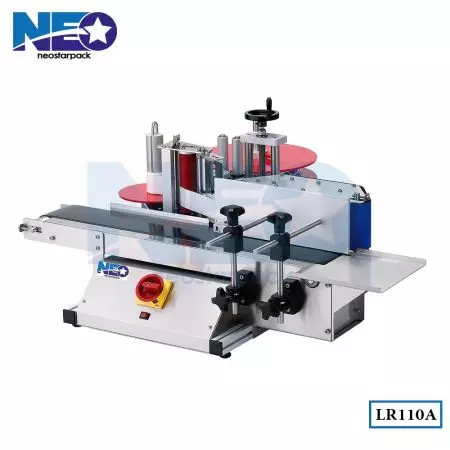
Tabletop Bottle Labeling Machine (Standard Model)
LR110A
Our tabletop round bottle labeler can make all kinds of round bottle labeling job done with...
Details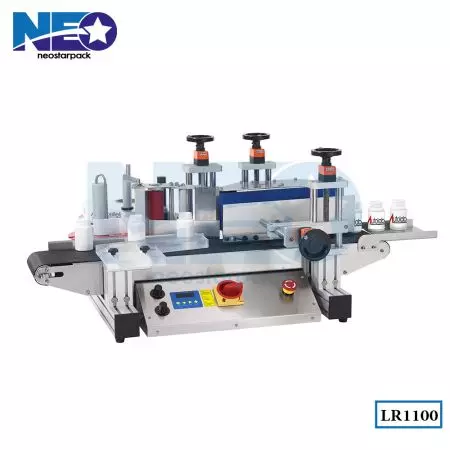
Semi-automatic Round Bottle Labeller
LR1100
The LR1100 Tabletop Round Bottle Labeler is used for labeling all sizes of round bottles and upright...
Details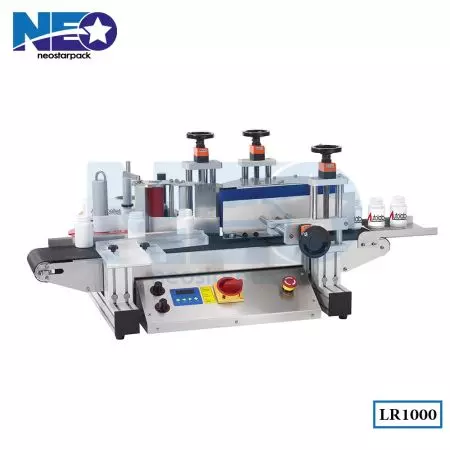
Tabletop Round Bottle Labeling Machine
LR1000
Tabletop round bottle labeling machine LR1000 is very suitable for small and medium manufacture...
Details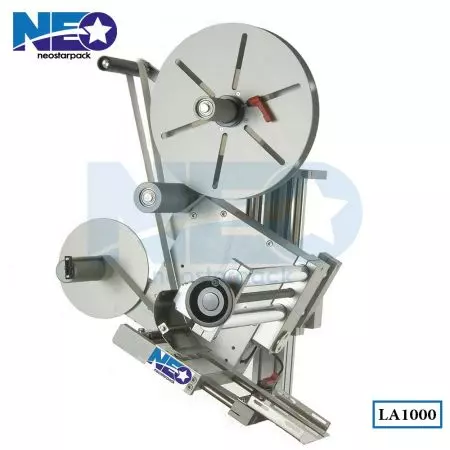
Label Applicator
LA1000
A label applicator plays an important role in a labeling machine, it is the heart of a labeler....
Details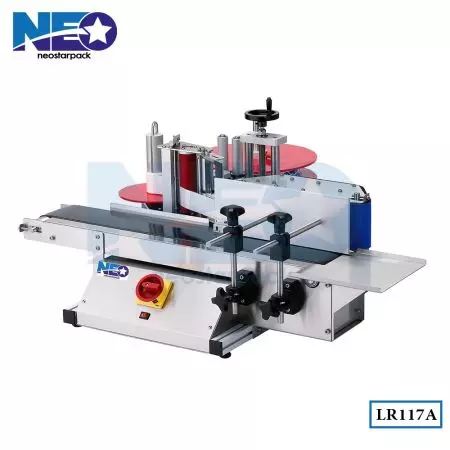
Tabletop fully wrap around labeler
LR117A
The Tabletop round bottle labeling machine LR117A is able to position the bottles in exact...
Details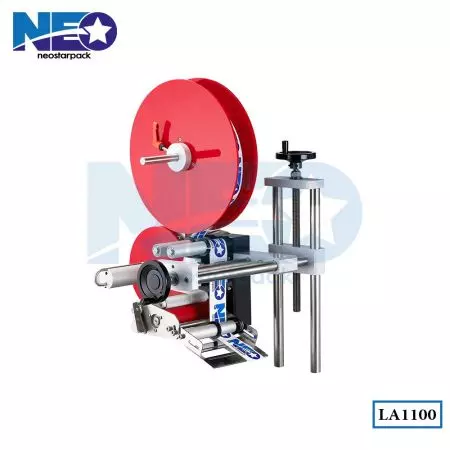
Top Label Applicator
LA1100
Top label applicator is a labeling device that using stepper motor to achieve high-precision...
Details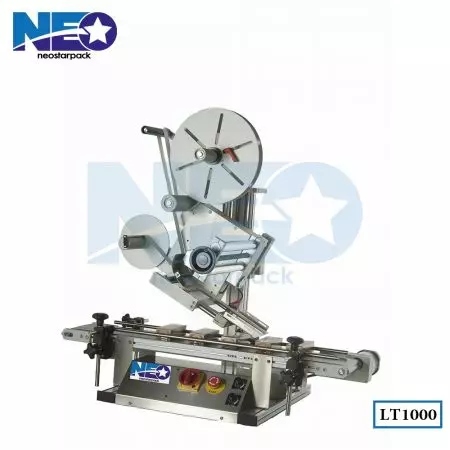
Tabletop Automatic Top Labeler
LT1000
The Tabletop automatic top labeler LT1000 is an economic, budget friendly piece of machinery...
Details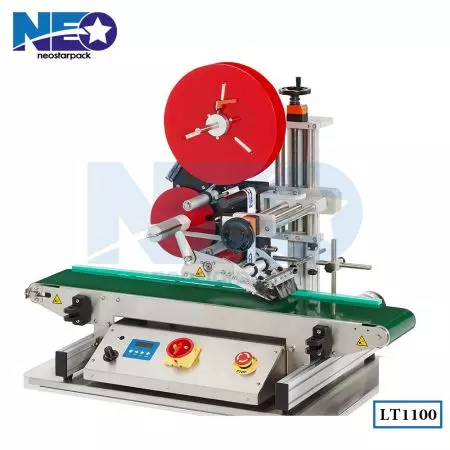
Tabletop Top Labeler
LT1100
Our LT1100, tabletop top labeler works with high efficiency, while provides perfect labeling...
Details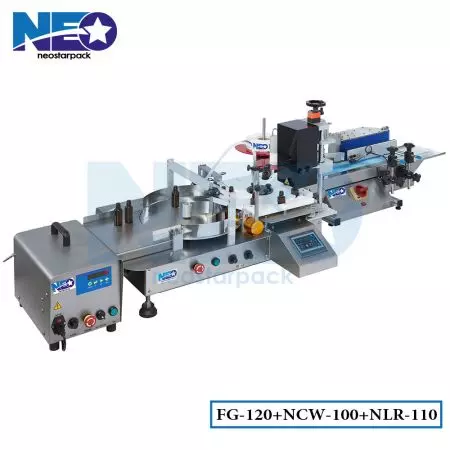
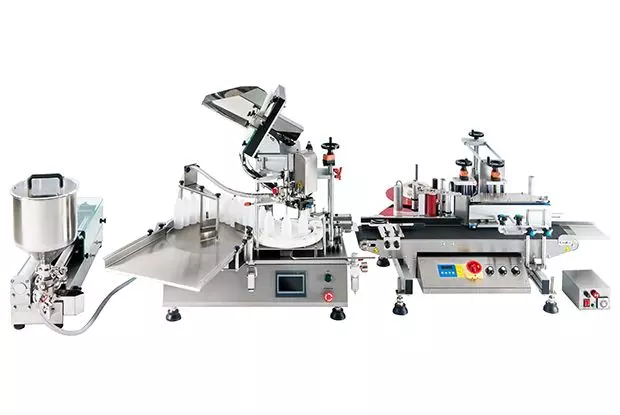
Compact Filling Line (Filler / Capper / Labeler)
Semi-automatic star wheel capper is the best solution of automatic filling line for flexible...
Details
 Download
 Hot Products

Semi-Automatic Tabletop Round Bottle Labeling Machine - Desktop Round Bottle Labeling Machine | Sold in 50 Countries High-Quality Industrial Packaging Equipment Manufacturer | Neostarpack Co., Ltd.
Based in Taiwan since 1998, Neostarpack Co., Ltd. has been an industrial packaging machine manufacturer. Our main products, include Semi-Automatic Tabletop Round Bottle Labeling Machine, labelers, liqiud filling machines, tablet counters, capping machines, bottle rinser machines, complete filling lines, label counters, card feeders and label dispensers, which are total packaging solutions for customers in bottling packaging machinery industry.
Neostarpack team has devoted ourselves to manufacture labeling machine, automatic filling machine, tablet capsul counter, capping machine, and other packaging machine. We offer bottle packaging solutions, help to improve production automation experience for over 20 years. We also provide professional OEM service and customized machine. We extend business domain to over than 50 countries.
As an automatic filling packaging line supplier, besides packaging labeling and capping equipment, filling and closing machine can be tailored to the specific needs of the customers and their industries. Both with advanced technology and 25 years of experience, Neostarpack ensures each customer's demands are met.